A plateau
they couldn't explain.
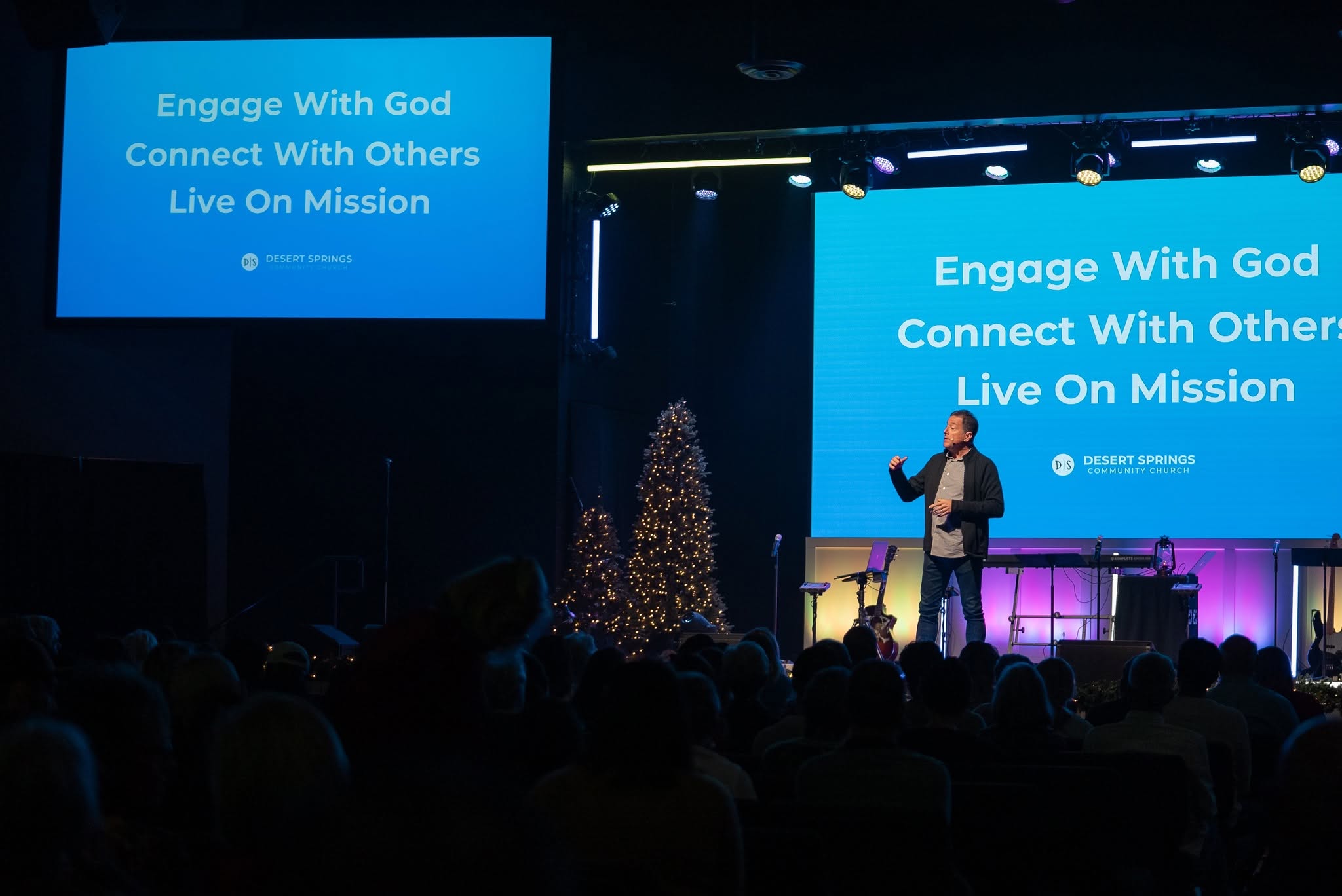
Emerging from the disruption of COVID, Desert Springs noticed a stagnation in growth. Attendance had plateaued. The church wasn't declining, but it wasn't seeing the return of people it anticipated.
They were being proactive, running digital ads and engaging outreach channels. But the impact wasn't matching the investment, and internally there was a growing sense of confusion about what to try next.
They came to Keenly for help with communication strategy. At first the conversations were tactical. But as we kept talking, it became clear the problem wasn't tactical. It ran deeper.
Listening
We started with honest, practical conversations with their communications director, and let the questions move from tactics to foundation.
Internal Perception
We interviewed dozens across the congregation and leadership, asking how people saw their own role in the life of the church.
Community Perception
We talked with people in the same city who had little or no connection to the church, to hear how Desert Springs was perceived from outside.
Mapping
We reviewed demographic reports and mapped where members actually lived in relation to the church, and what that revealed.
Clarity, without ownership.
Most churches struggle to articulate their mission. Desert Springs didn't, people could name the pillars easily. But when asked what those pillars meant to them personally, the answers were distant. Ministry was something the staff did.
Clarity Without Ownership
People knew the mission but didn't carry it. They viewed ministry as the work of pastors and staff, not themselves.
Low Community Awareness
Despite its size and longevity, awareness of Desert Springs among local business and civic life was surprisingly low.
A Regional Commuter Church
The average attendee traveled nearly eight miles, often passing other churches. It had quietly become a destination, not a neighborhood.
Spectators, Not Participants
Centralized around the stage, the church had slowly shifted its people into spectators instead of participants.
“Instead of asking how do we get more people here, we asked how do we bring the church to more people.”
Flip the stage.
Become a sending church.
We encouraged the leadership to flip the stage, not physically, but conceptually. To shift from a destination-oriented church to a sending-oriented one. From platform-centric ministry toward people-powered ministry. From stage-focused to story-focused.
Rather than relying on staff to drive the mission, the church began celebrating and sharing the stories of transformation already happening in ordinary people's lives. The most effective vehicle became a podcast, The Stories Collective.
Alongside it, we led staff workshops on perception, storytelling, and ownership, and helped reshape how the church connects with its community.
From spectators to a movement.
There is now a consistent, clear message across platforms and a shared language around mission. But the most powerful outcome was the cultural shift.
A Culture of Ownership
People now see themselves as active participants in the mission of God, not an audience watching it happen on a stage.
The Stories Collective
The podcast became central to the church's culture, with over 100 episodes and listeners across the country.
Substantial Growth
Attendance increased significantly, and a major capital campaign was launched and fully funded for campus expansion.
More Coming to Faith
More people are coming to faith, sharing their stories, and stepping into ministry, discovering they don't have to be on stage to be used by God.